 Image 1 of 3
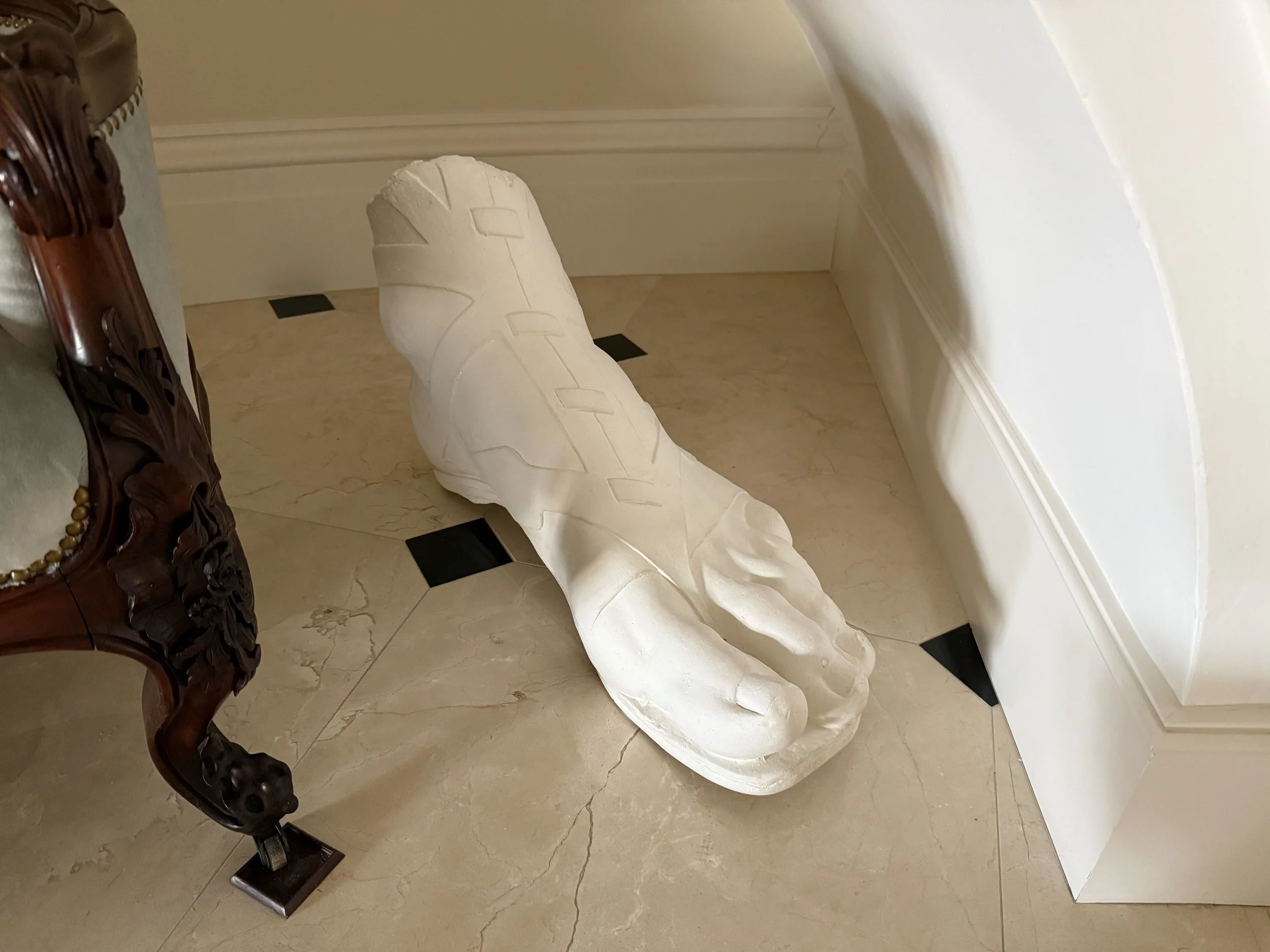 Image 2 of 3
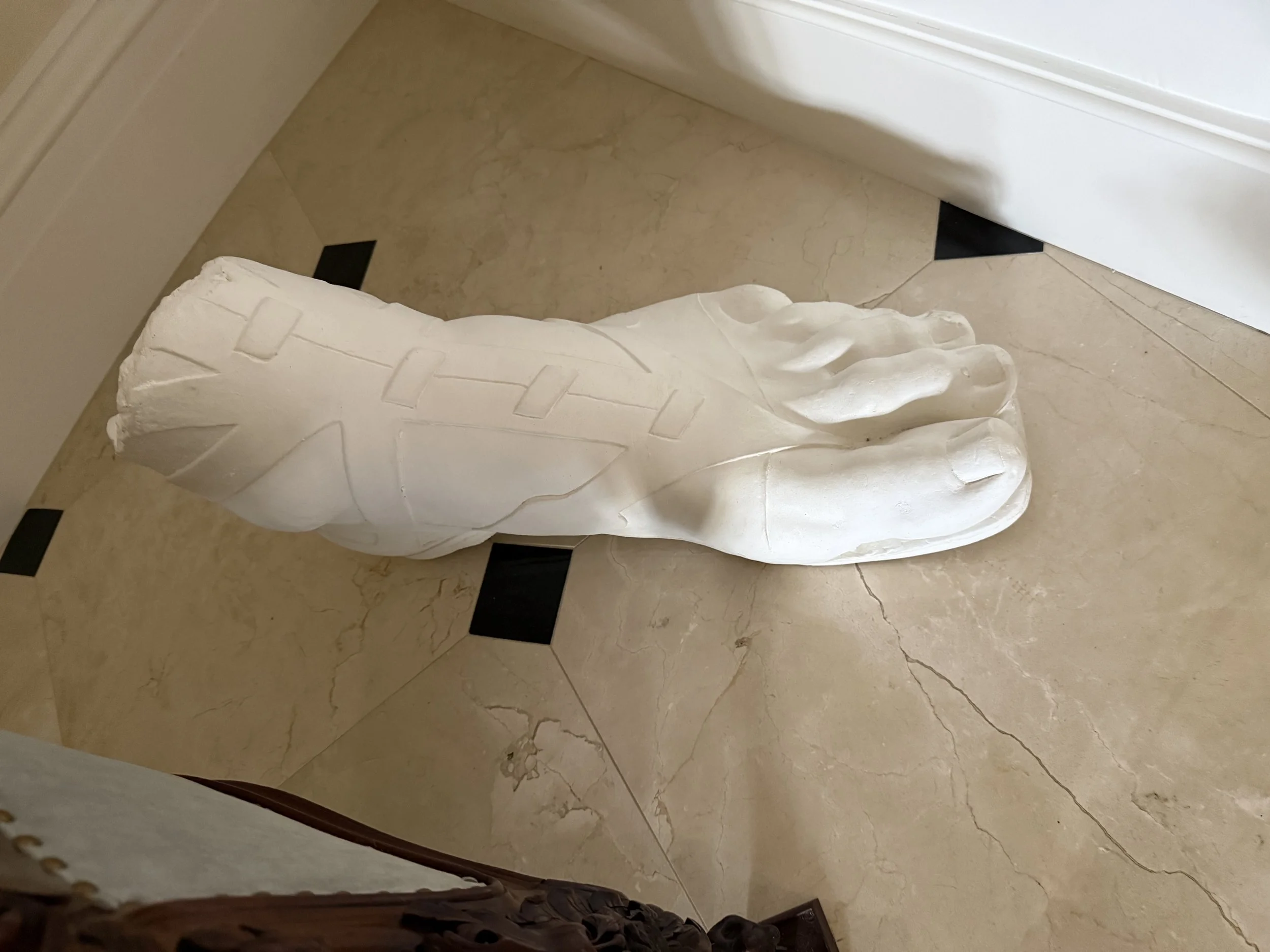 Image 3 of 3
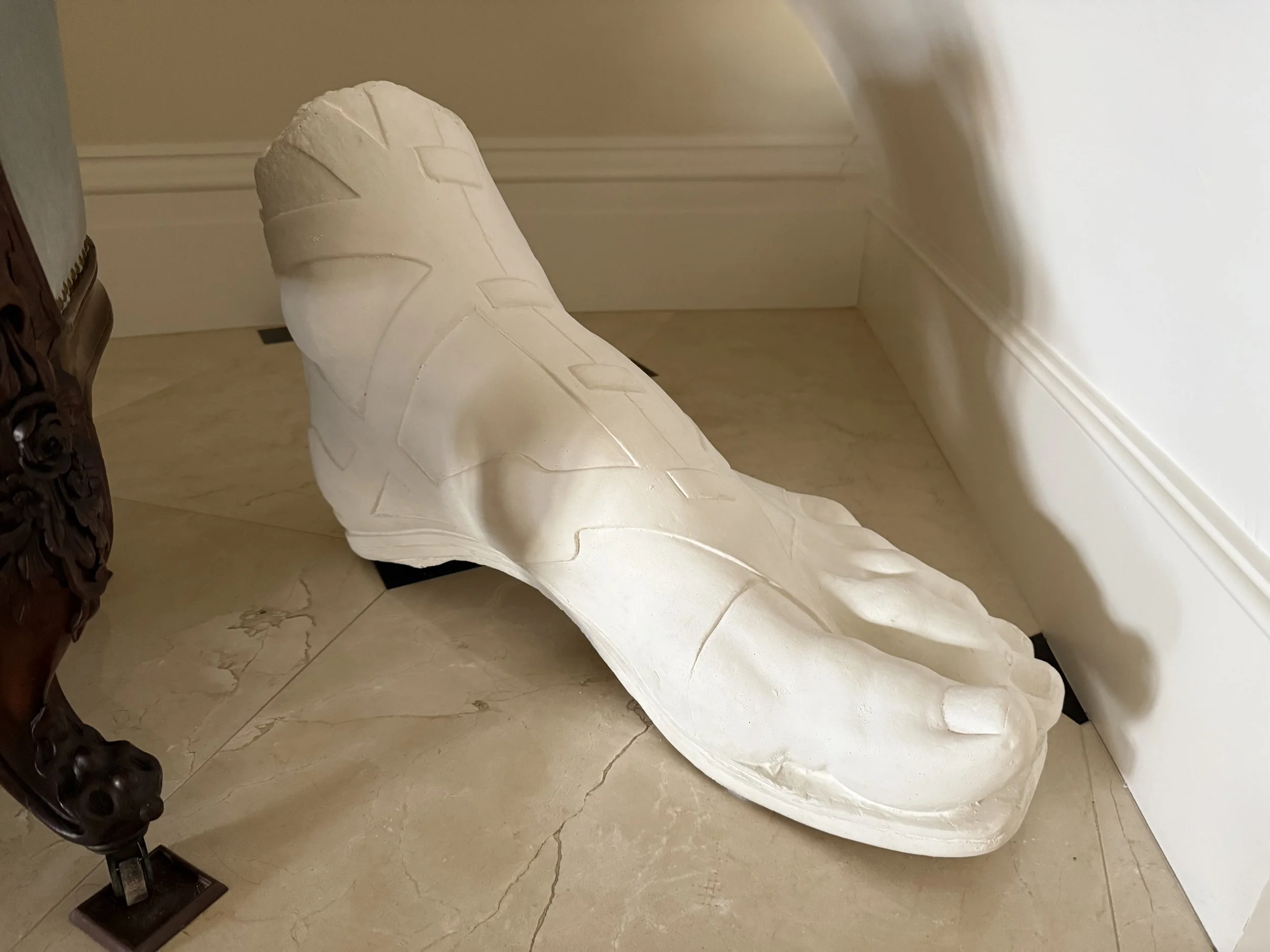
Louis XIV’s severed foot was part of a larger bronze sculpture of the Sun God on his horse, once displayed in the center of the Place Vendôme in Paris but then taken down in 1792 during the French Revolution to symbolize the abolition of the monarchist system. The artist, Girardon, was inspired by an antique sculpture of Marcus Aurelius which stands at the piazza del Campidoglio in Rome, portraying the Emperor on a saddle-less horse as a sign of power and control. While doubling the scale, Girardon represented Louis XIV in a similar manor allowing us today to have a stirrup-less foot molded cast with romanesque sandals. Although this foot is to be placed in a private residence, the original piece is on display at the Paris Carnavalet Museum; 28” L x 11” W x 17“H
Louis XIV’s severed foot was part of a larger bronze sculpture of the Sun God on his horse, once displayed in the center of the Place Vendôme in Paris but then taken down in 1792 during the French Revolution to symbolize the abolition of the monarchist system. The artist, Girardon, was inspired by an antique sculpture of Marcus Aurelius which stands at the piazza del Campidoglio in Rome, portraying the Emperor on a saddle-less horse as a sign of power and control. While doubling the scale, Girardon represented Louis XIV in a similar manor allowing us today to have a stirrup-less foot molded cast with romanesque sandals. Although this foot is to be placed in a private residence, the original piece is on display at the Paris Carnavalet Museum; 28” L x 11” W x 17“H